

In aviation, inclusion is operational. It is reflected in the infrastructure airports build, the experiences they design, and the leadership pathways they open. From accessible childcare and secure transportation to inclusive terminal planning and executive representation, these measures directly support continuity, safety, and long-term growth.
ACI World highlights how advancing women’s participation across the airport ecosystem — from frontline operations to executive leadership — strengthens resilience and performance.
Key Takeaways
- Women’s participation strengthens operational resilience and performance across the global airport sector.
- Airports are implementing workforce solutions such as childcare infrastructure and inclusive operational representation.
- Passenger infrastructure is evolving to support caregiving, family travel, and biological needs within terminal design.
- Leadership representation plays a key role in shaping strategy, investment priorities, and long-term airport performance.
Note: The examples referenced below are illustrative and do not represent an exhaustive list of initiatives underway across the global airport community.
Workforce Participation
The shift toward tangible workforce participation strategies accelerated when airports began treating social barriers as operational challenges. Today, leading airports recognize that enabling full participation is a core component of operational resilience. In a 24/7 industry, this depends on practical support.
As highlighted in the ACI World–ICF Workforce Management at Airports Analytical Report, workforce participation barriers directly affect recruitment, retention, and operational continuity. In a shift-based industry, reliable childcare is therefore not a peripheral benefit, but workforce infrastructure that supports parents across roles and income levels.
Global Airport Examples
In response, airports are implementing practical, scalable solutions:
- Pittsburgh International Airport broke ground (2023) on an on-site childcare center specifically for airport employees. It was a landmark acknowledgment that “the future of work” must include caregiving support.
- Kelowna International Airport further illustrates that childcare support is not limited to major global hubs. By advancing childcare accessibility solutions tailored to its regional workforce, the airport demonstrates that strengthening participation is scalable across airport sizes. Two years after opening the facility is being expanded to add 24 more childcare positions focused on the 0-2 year age group as that is the most critical in retaining women in the work place.
Beyond caregiving infrastructure, operational representation is also evolving.
In March 2024, Swissport supported International Women’s Day at Sydney Airport with dedicated all-women ramp and passenger service teams on Jetstar flights, showcasing women’s capabilities in ground operations.
Participation also extends beyond the airside environment and into the broader airport ecosystem:
Kempegowda International Airport supports women-focused taxi services, including pink-liveried vehicles operated by women drivers, contributing to enhanced travel safety for women passengers.
At Pune Airport in India, retail space has been allocated to women-led self-help groups, providing local artisans with visibility in a high-traffic travel environment and expanding pathways to economic participation.
Inclusive Passenger Experience and Infrastructure
In line with the ASQ 2026 Global Traveller Survey, airports are moving beyond transactional service toward a more integrated Human Experience; one that recognizes caregiving, biological needs, and family travel as structural considerations within terminal planning.

This shift is reflected in infrastructure decisions embedded directly into airport facilities:
- Across North America and globally, and William P. Hobby Airport have helped set a new standard by providing free menstrual products in all public restrooms — an approach increasingly adopted by major hubs including London Heathrow and Manchester.
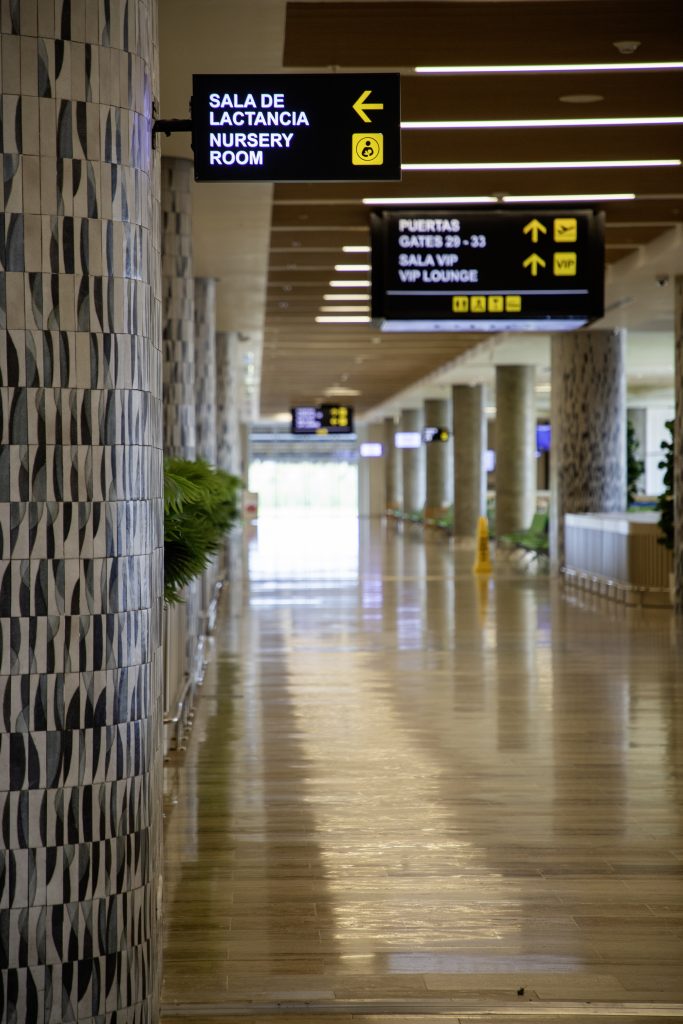
Caregiving infrastructure in airports has evolved from a passenger amenity to an integrated component of terminal design.
- From Istanbul Airport to Incheon International Airport, major global hubs provide dedicated nursing and family care facilities as part of their passenger amenities.
- Punta Cana Airport offers nursing rooms for travelling mothers, while Iquitos International Airport has established lactation space for staff, extending maternal support to both passenger and workforce environments.
- In North America, Chicago O’Hare International Airport provides 20 dedicated lactation spaces, with expanded nursing facilities at San Francisco International Airport, Orlando International Airport, and Toronto Pearson.

Leadership
Governance and executive representation form a third, but not least, dimension of this systems-based approach. While workforce policies and infrastructure shape participation in practice, leadership determines whether priorities are sustained through strategy, investment, and accountability.

According to the ACI World–ICF Workforce Management at Airports Analytical Report:
- Within airport operating companies globally, women hold approximately 29% of senior management positions.
- Women comprise roughly 32% of the global airport workforce, with growing representation in operational and technical roles.
These figures reflect measurable progress while underscoring the continued importance of strengthening pathways into executive decision-making roles. Representation at senior levels influences not only organizational culture, but also investment priorities, talent development frameworks, and long-term performance planning.
ACI World’s first woman Chair, Candace McGraw, serving from 2025–2026, marked an important step in broadening representation at the highest level of ACI’s airport governance.
Moving Forward: Embedding Women’s Participation into Airport Performance
Across the global sector, workforce support, caregiving infrastructure, and leadership representation are increasingly integrated into operational planning and governance structures. These elements influence talent pipelines, infrastructure standards, capital investment priorities, and long-term strategic direction.
As participation becomes embedded across workforce systems, terminal design, and executive decision-making, airports strengthen operational resilience, reinforce passenger trust, and sustain performance over time.
Airports worldwide are integrating workforce participation, caregiving infrastructure, and leadership representation into operational planning and governance. These measures strengthen workforce resilience, improve passenger experience, and support long-term performance across the global airport sector.
Sources Referenced
related articles





comments