
In 2025, global air travel continued to build on its post-pandemic recovery, following the full rebound achieved in 2024. According to Airports Council International(ACI) World data, global passenger traffic reached 9.8 billion passengers, an increase of 3.6% versus 2024 and a gain of 7.3% compared to 2019. This confirms the resilience of the world’s leading aviation hubs, even as they navigate new constraints and shifting global dynamics.
Busiest airports in the world in 2025
At the top of the global airport rankings for total passenger traffic, Hartsfield-Jackson Atlanta International Airport (ATL) retains its title as the world’s busiest airport for another consecutive year, leading the global airport rankings for total passenger traffic, with 106.3 million passengers. Dubai International Airport (DXB) holds 2nd place with 95.2 million passengers, while Tokyo Haneda Airport (HND) climbs to 3rd with 91.7 million passengers, a significant milestone reflecting the resurgence of Asia-Pacific air traffic.
The global aviation context in 2025 was shaped by a resilient but fragile world economy, with global GDP growing approximately 3.0–3.2%. Lower jet fuel prices (down ~13% year-over-year) and easing inflation helped sustain strong passenger demand. However, capacity constraints, geopolitical disruptions, and infrastructure bottlenecks increasingly became more central challenges. This article covers the top 10 ACI World busiest airports for total passengers, international passengers, air cargo, and aircraft movements.
Initial data may differ slightly when the full rankings are confirmed in July 2026, which are based on detailed information from over 2,700 airports worldwide.

Top 10 busiest airports in the world by passenger traffic
In 2025, global total passengers are estimated to have reached 9.8 billion, representing an increase of 3.6% from 2024 or a gain of 7.3% from 2019 results. The top 10 busiest airports for total passenger traffic collectively represent 9% of global passenger traffic, underscoring the role these hubs play in the world’s aviation network.
What are the top 10 busiest airports in the world by passenger traffic?
| Rank | Airport | Country | Passengers* (2025) |
| 1 | Hartsfield-Jackson Atlanta International Airport (ATL) | United States | 106,302,208 |
| 2 | Dubai International Airport (DXB) | UAE | 95,192,160 |
| 3 | Tokyo Haneda Airport (HND) | Japan | 91,679,814 |
| 4 | Dallas/Fort Worth International Airport (DFW) | United States | 85,660,127 |
| 5 | Shanghai Pudong International Airport (PVG) | China | 84,994,227 |
| 6 | Chicago O’Hare International Airport (ORD) | United States | 84,814,099 |
| 7 | London Heathrow Airport (LHR) | United Kingdom | 84,482,126 |
| 8 | Istanbul Airport (IST) | Turkey | 84,437,710 |
| 9 | Guangzhou Baiyun International Airport (CAN) | China | 83,582,952 |
| 10 | Denver International Airport (DEN) | United States | 82,427,962 |
* Total passengers enplaned and deplaned, passengers in transit counted once. Source: ACI World Preliminary World Airport Traffic Rankings 2025.
Key drivers of passenger traffic growth in 2025
- Resilient but fragile global economy: Global GDP grew ~3.0–3.2% in 2025, above expectations but below historical norms, with ongoing risks from trade tensions, protectionism, and policy uncertainty affecting air travel demand.
- Lower fuel prices and easing inflation supported demand: Jet fuel prices fell (~-13% year-over-year) and inflation eased, boosting purchasing power and sustaining strong passenger demand despite volatility.
- Capacity becoming a key constraint: Growth was increasingly limited by infrastructure and slot constraints in some regions, aircraft delivery backlogs, and air navigation limitations.
- Geopolitics reshaping traffic flows: Airspace closures and conflicts increased flight times and costs, prompting rerouting and shifting traffic toward alternative hubs.

Asia-Pacific: the engine of growth
Asia-Pacific airports are rebounding strongly, driving significant changes in global airport rankings. Tokyo Haneda Airport (HND) rises to 3rd place with 91.7 million passengers, cementing Japan’s largest airport as one of the busiest passenger airports in the world.
The most dramatic movement comes from Shanghai Pudong International Airport (PVG), which records the biggest jump in the top 10, rising from 10th to 5th place. This growth was supported by international traffic recovery, visa policy easing, and significantly expanded connectivity. Similarly, Guangzhou Baiyun International Airport (CAN) rebounds to 9th position, up from 57th in 2022.
China’s travel reopening has been a pivotal factor: the return of Chinese outbound and inbound travel has accelerated growth across Asia-Pacific hubs and internationally. This trend is expected to continue, though gradually moderating as capacity restoration nears completion and demand becomes more sensitive to broader economic and geopolitical conditions.
Middle East hubs: Dubai’s continued reign
Dubai International Airport (DXB) remains firmly in 2nd place with 95.2 million total passengers, maintaining its position as the world’s busiest international airport. DXB’s strategic geographic position between Europe, Asia, and Africa continues to make it a dominant global hub for long-haul connectivity.
Geopolitics have played a notable role in shaping Middle East traffic flows in 2025. Airspace closures and ongoing conflicts in various regions increased flight times and costs, prompting airlines to reroute traffic through alternative hubs. Istanbul Airport (IST) also benefited from these dynamics, reinforcing the Middle East and Eastern Mediterranean as critical corridors of global aviation.
North America and Europe: approaching saturation
Four airports in the top 10 are located in the United States, reflecting continued North American market strength. Hartsfield-Jackson Atlanta Airport (ATL), Dallas/Fort Worth International Airport (DFW), Denver International Airport (DEN), and Chicago’s O’Hare all appear in the rankings, with domestic passenger shares ranging from 80–95% of total traffic, a structural feature of the U.S. aviation market.
However, global growth in 2025 was led primarily by international traffic, while North American and European hubs neared saturation. Airports such as London Heathrow Airport (LHR) and Paris Charles de Gaulle Airport (CDG) are operating at or near maximum capacity, limiting their ability to absorb further growth without significant infrastructure investment.
The global leaders in international passenger traffic
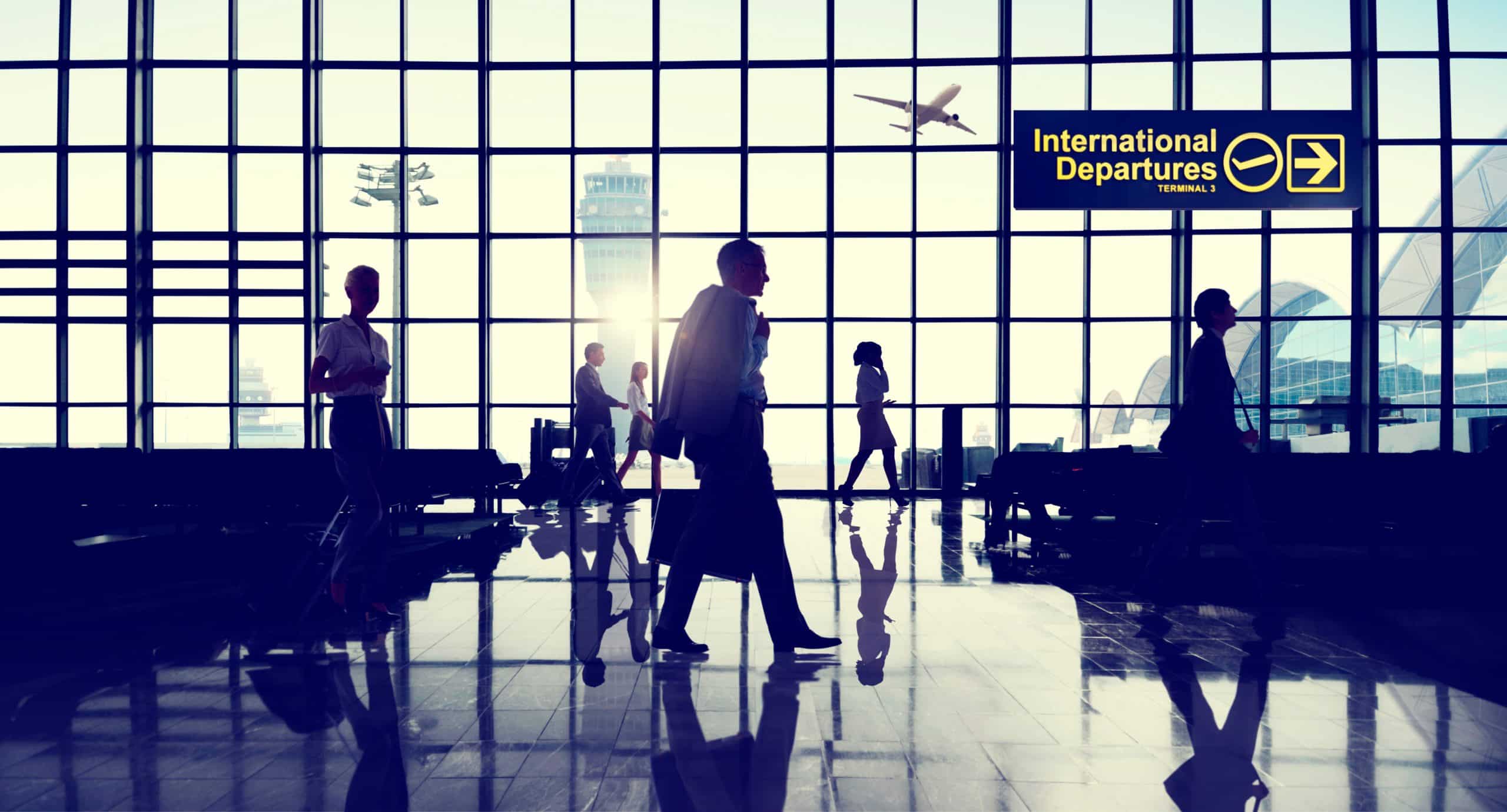
International passenger traffic reached 4.0 billion in 2025, representing a gain of 5.9% versus 2024 and 8.3% versus 2019. This strong performance confirms the sustained recovery of cross-border air travel demand. The top 10 busiest airports for international passenger traffic represent 17% of total international traffic, highlighting how concentrated global international travel is among a handful of key hubs.
Dubai International Airport (DXB) retains its position as the world’s busiest international airport, while London Heathrow Airport (LHR) and Incheon International Airport (ICN) hold onto 2nd and 3rd respectively. The continued strength of these hubs reflects the enduring importance of intercontinental connectivity in global air travel demand.
Busiest airports by international passenger traffic (2025)
| Rank | Airport | Country | Intl. Passengers* (2025) |
| 1 | Dubai International Airport (DXB) | UAE | 95,192,160 |
| 2 | London Heathrow Airport (LHR) | United Kingdom | 79,874,784 |
| 3 | Incheon International Airport (ICN) | South Korea | 73,554,772 |
| 4 | Singapore Changi Airport (SIN) | Singapore | 69,402,000 |
| 5 | Amsterdam Airport Schiphol (AMS) | Netherlands | 68,767,548 |
| 6 | Istanbul Airport (IST) | Turkey | 66,608,849 |
| 7 | Paris Charles de Gaulle Airport (CDG) | France | 66,135,938 |
| 8 | Hong Kong International Airport (HKG) | China SAR | 60,824,359 |
| 9 | Frankfurt Airport (FRA) | Germany | 57,528,528 |
| 10 | Hamad International Airport (DOH) | Qatar | 54,338,667 |
* International passengers enplaned and deplaned. Source: ACI World Preliminary World Airport Traffic Rankings 2025.
Air cargo: e-commerce and supply chain shifts
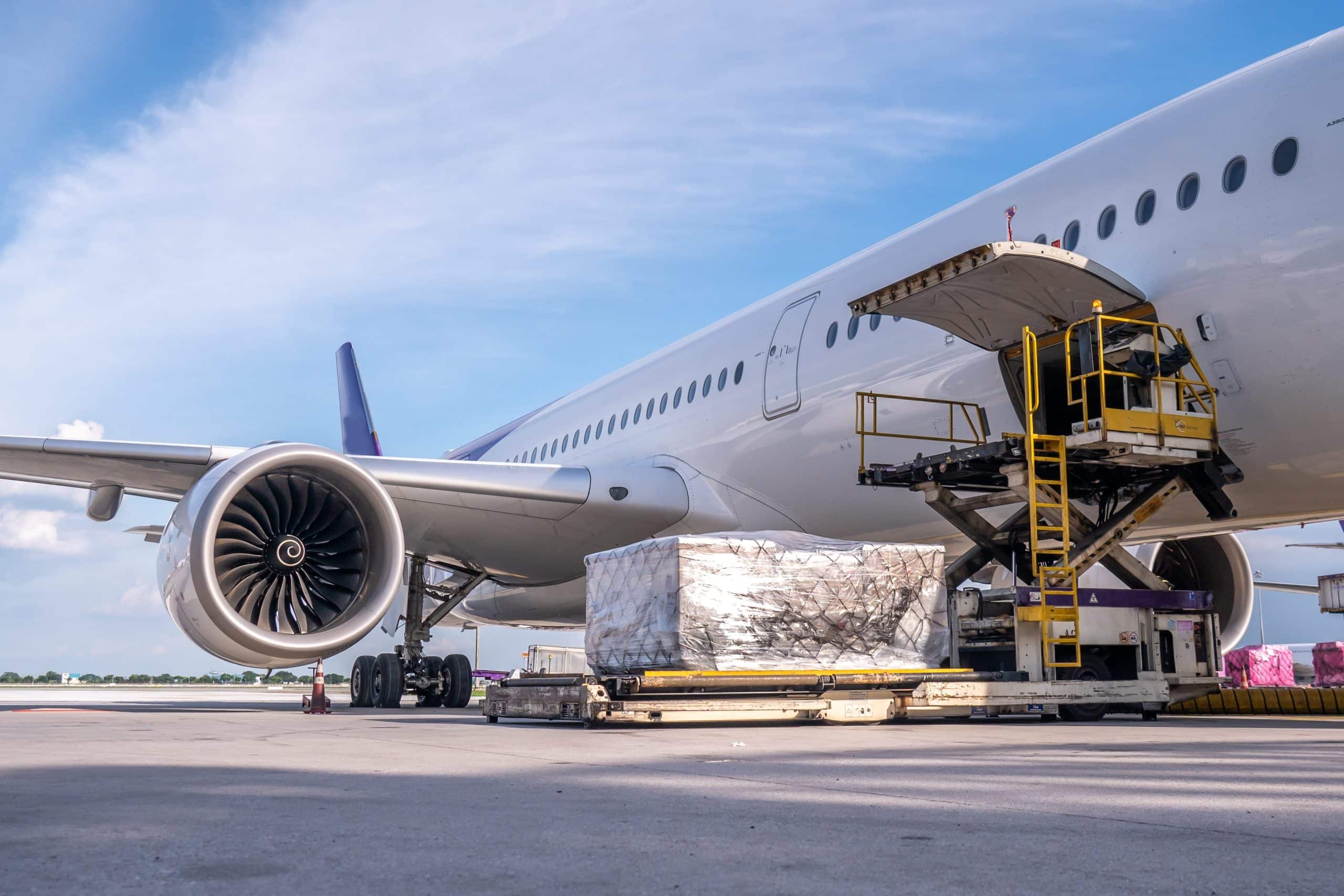
Air cargo volumes are estimated to have increased by 2.9% year-over-year, almost +8.8% versus 2019 – reaching approximately 128.9 million metric tonnes in 2025. Air cargo traffic is notably more concentrated among the leading airports than passenger traffic: the top 10 cargo airports represent close to 26% of global air cargo traffic.
The increase in air freight is driven by strong e-commerce demand and ongoing supply chain adjustments. Air cargo volumes have stabilized near record levels, supported by e-commerce growth and faster, restructured global supply chains that increasingly favour air logistics over sea freight for time-sensitive goods. The United States and China remain the dominant poles of global air cargo activity, linked by major logistics hubs.
What are the busiest cargo airports in the world? (2025)
| Rank | Airport | Country | Cargo* (Metric Tonnes, 2025) |
| 1 | Hong Kong International Airport (HKG) | China SAR | 5,070,256 |
| 2 | Shanghai Pudong International Airport (PVG) | China | 4,096,016 |
| 3 | Ted Stevens Anchorage International Airport** (ANC) | United States | 3,854,614 |
| 4 | Louisville Muhammad Ali International Airport (SDF) | United States | 3,396,437 |
| 5 | Miami International Airport (MIA) | United States | 3,128,165 |
| 6 | Memphis International Airport (MEM) | United States | 2,969,502 |
| 7 | Incheon International Airport (ICN) | South Korea | 2,954,684 |
| 8 | Hamad International Airport (DOH) | Qatar | 2,614,214 |
| 9 | Taiwan Taoyuan International Airport (TPE) | Taiwan | 2,499,899 |
| 10 | Guangzhou Baiyun International Airport (CAN) | China | 2,439,248 |
* Cargo: loaded and unloaded freight and mail in metric tonnes. ** Anchorage includes transit freight. Source: ACI World Airport Traffic Preliminary Traffic Rankings 2025.
Hong Kong International Airport (HKG) and Shanghai Pudong International Airport (PVG) remain in 1st and 2nd place respectively for air cargo, while Ted Stevens Anchorage International Airport (ANC) gains 3rd rank. Anchorage’s position reflects its critical role as a refuelling and transit stop on trans-Pacific cargo routes between Asia and North America, a function that has grown in importance as supply chains restructure.
Aircraft movements: Chicago O’Hare takes the lead
Global aircraft movements are estimated at around 101.5 million in 2025, representing a gain of 2.3% from 2024 results or +0.2% versus 2019. Aviation operational data shows that aircraft movements have nearly fully recovered to pre-pandemic levels, even as airlines manage fleet constraints driven by aircraft delivery backlogs. The top 10 airports for aircraft movement represent 6.4% of global aircraft movements.
Chicago O’Hare International Airport (ORD) ranks 1st for aircraft movements, followed by Hartsfield-Jackson Atlanta International Airport (ATL) in 2nd and Dallas/Fort Worth International Airport (DFW) in 3rd. O’Hare’s high flight frequency reflects its role as one of the most connected domestic and international hubs in the United States, processing a remarkable volume of aircraft operations year-round.
In terms of aircraft movements, ATL and ORD have alternated between 1st and 2nd place since 1998. ORD ranks first globally in aircraft movements in 2025, after holding the second position over the previous five years. ORD also ranked first globally in aircraft movements in 2019.
| Rank | Airport | Country | Movements* (2025) |
| 1 | Chicago O’Hare International Airport (ORD) | United States | 860,015 |
| 2 | Hartsfield-Jackson Atlanta International Airport (ATL) | United States | 807,625 |
| 3 | Dallas/Fort Worth International Airport (DFW) | United States | 743,394 |
| 4 | Denver International Airport (DEN) | United States | 701,335 |
| 5 | Harry Reid International Airport (LAS) | United States | 586,046 |
| 6 | Los Angeles International Airport (LAX) | United States | 580,996 |
| 7 | Charlotte Douglas International Airport (CLT) | United States | 574,193 |
| 8 | Shanghai Pudong International Airport (PVG) | China | 557,046 |
| 9 | Guangzhou Baiyun International Airport (CAN) | China | 550,512 |
| 10 | Istanbul Airport (IST) | Turkey | 549,309 |
*Movements: landings and takeoffs. Source: ACI World Airport Traffic Preliminary Traffic Rankings 2025.
Conclusion
The world’s busiest airports reflect the resilience of air travel, as they manage rising demand amid increasing operational complexity. This performance comes against a backdrop of steady but uncertain economic growth and a recovery led by international traffic, even as capacity constraints and geopolitical developments continue to influence global flows. These hubs remain essential to the movement of people and goods, supporting trade, tourism, and economic activity across their regions.




APL- Moxie
27 Jun 2026
Awesome Stats