
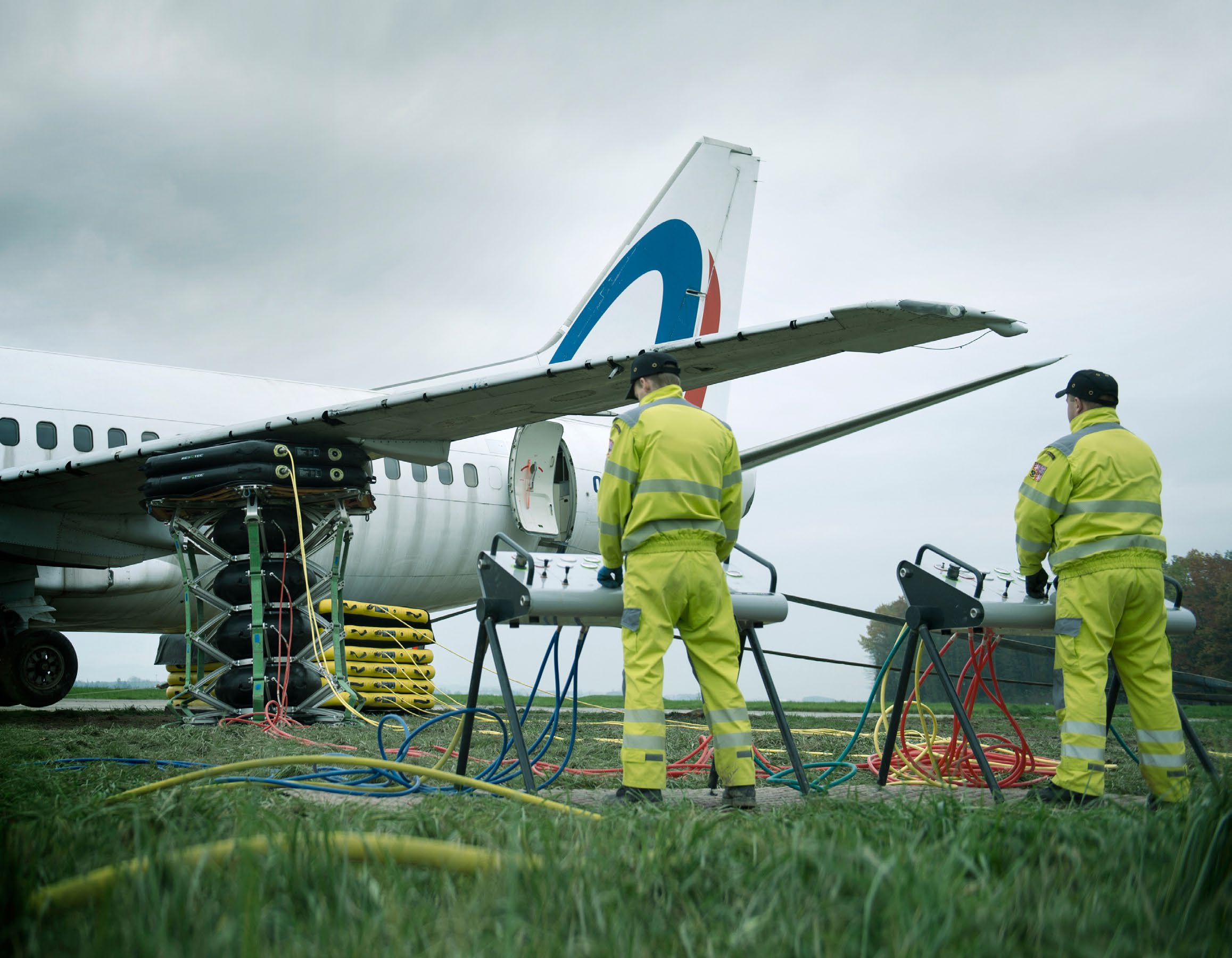
When an aircraft leaves the paved surface, suffers landing gear damage or can no longer be moved using normal towing procedures, the initial emergency response may only be the beginning of the operational challenge for the airport.
The aircraft still needs to be safely removed, sometimes from a runway or other critical part of the movement area. Until this is completed, airport operations may remain restricted or, in the case of a single-runway airport, completely suspended.
Disabled aircraft removal is therefore not only a technical activity. It is also an important part of an airport’s operational resilience and business continuity planning.
What is disabled aircraft removal?
Disabled aircraft removal covers a wide range of situations.
At the relatively straightforward end, an aircraft may have left the paved surface with its landing gear intact and require ground preparation and assistance to return to the pavement. More complex situations can involve bogged or damaged landing gear, requiring the aircraft to be stabilised, lifted or levelled before it can be moved.
In more severe cases, one or more landing gears may no longer be usable and specialist transport equipment may be required to relocate the aircraft.
The circumstances of every incident will be different. Aircraft type and weight, the position and condition of the aircraft, soil conditions, weather, available access and the extent of any damage all influence how the removal operation can be performed.
This makes it difficult to improvise an aircraft recovery operation after an incident has already occurred.
The importance of preparing before an incident
One of the key questions for an airport is therefore not simply whether a Disabled Aircraft Removal Plan exists, but whether the arrangements described in that plan can actually be implemented when required.
An airport may have a documented plan but still face significant delays if responsibilities have not been agreed in advance, specialist equipment is located many hours away, local contractors are unfamiliar with airport requirements or trained personnel are not available.
The aircraft operator also plays a critical role. Aircraft-specific technical information, maintenance expertise and access to the applicable Aircraft Recovery Manual or Document will normally be required during the recovery operation.
For this reason, disabled aircraft removal should be treated as a coordinated activity involving the airport operator, aircraft operator and other parties that may be needed during an incident.
Depending on the airport, these may include ground handling companies, aircraft maintenance organisations, fuel providers, rescue and firefighting services, heavy-equipment contractors, civil aviation authorities and accident investigation authorities.
The time to establish these relationships and clarify responsibilities is before an aircraft becomes disabled.
From having a plan to having a capability
Preparedness can be considered across five practical areas: the plan, the people, the partnerships, the resources and the practice.
The plan should identify who coordinates the response, how the airport and aircraft operator will work together, how additional resources will be activated and which procedures apply during the different phases of the operation.
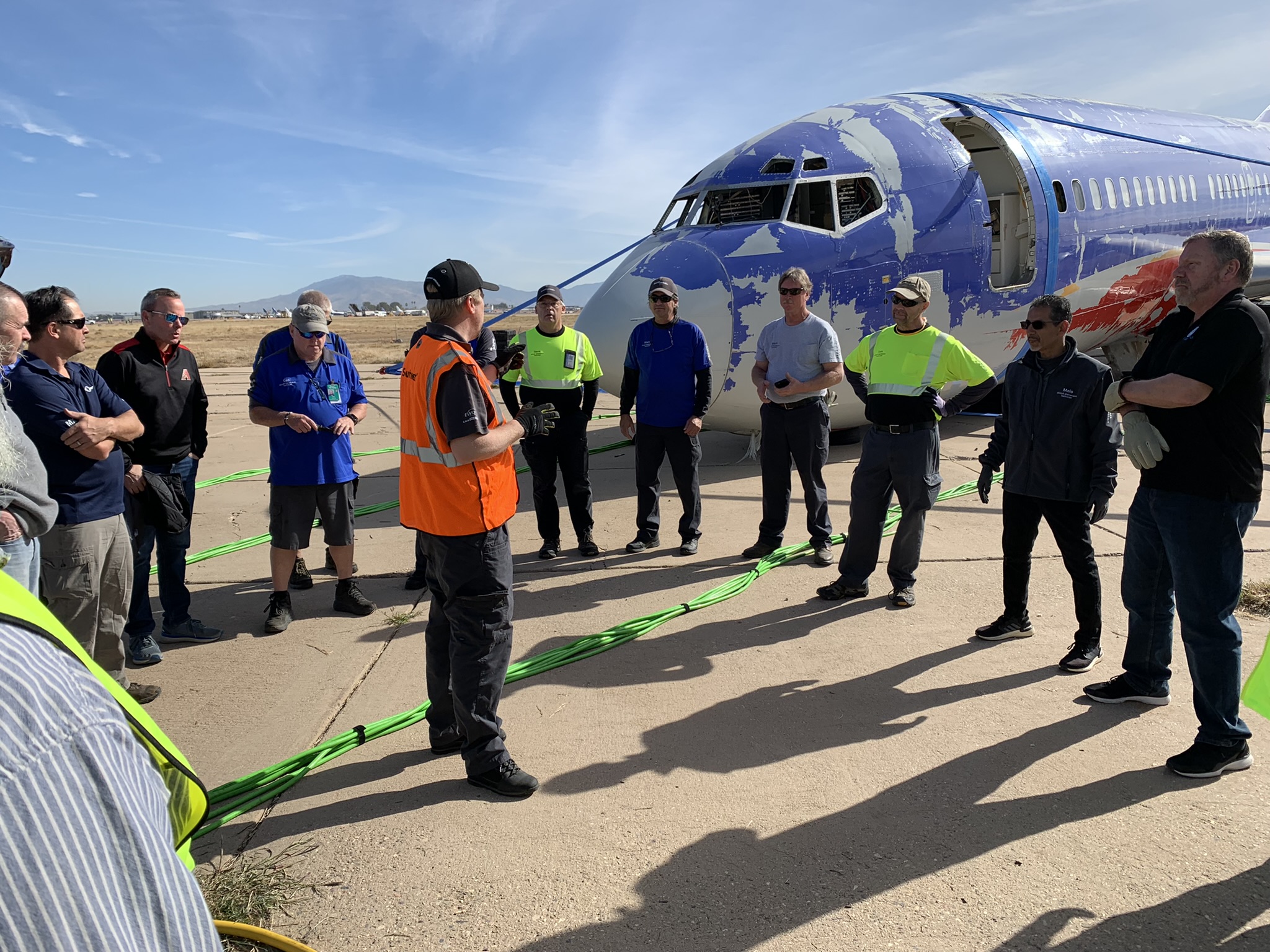
The people involved need sufficient knowledge to manage or support the recovery. This includes both those responsible for managing the incident and personnel expected to operate specialised recovery equipment.
The partnerships with airlines and other stakeholders need to be established in advance. An airport cannot perform an aircraft recovery operation in isolation, and an aircraft operator will normally also depend heavily on airport support.
The resources required for credible recovery scenarios need to be identified. These may be located at the airport, elsewhere within an airport group, with an airline or through a third-party provider. What matters is that the airport knows what is available, where it is located and how quickly it can be mobilised.
Finally, the arrangements need to be practised. Tabletop exercises, practical exercises and recurrent training can identify gaps that may not be apparent from reviewing a written plan.
Together, these elements turn a plan into an operational capability.
There is no single model for every airport
The level of capability required will not be the same for every airport.
A major hub with several runways has a different operational risk profile from a remote single-runway airport. An airport located close to other major airports may be able to share equipment or make use of regional resources, while an island airport may have limited options once an incident occurs.
Aircraft types also matter. The equipment and technical capability required to recover a regional aircraft can be very different from that required for a wide-body aircraft.
For this reason, the starting point should be a realistic assessment of the airport’s own exposure.
Questions to consider include the aircraft normally operating at the airport, runway configuration, historical incidents, surrounding terrain, availability of local contractors, access to specialist recovery equipment and the expected time required to mobilise external support.
Based on this assessment, airports can select different operating models.
Some airports primarily rely on the affected aircraft operator or specialist third parties and focus their own role on coordination and local support. Others maintain basic equipment and trained personnel locally while relying on external support for more complex incidents. Some airports choose to develop an airport-led capability, maintaining dedicated recovery equipment and trained personnel that can be made available to assist any aircraft operator experiencing an incident at the airport.
There is no need for every airport to arrive at the same solution. The important point is that the chosen model is understood, realistic and tested.
Different airports, different approaches
Examples from airports around the world show how local circumstances influence these decisions.
At Montréal–Pierre Elliott Trudeau International Airport, the airport operator works with Air Canada, which maintains specialist recovery equipment and trained personnel at the airport and can support other operators when required. This model shows the value a capable based aircraft operator can bring to the wider airport community. For similar arrangements to work, activation procedures, responsibilities, personnel availability and coordination need to be clearly understood in advance.
Curaçao International Airport faces a different challenge. As an island airport with a single runway, rapid access to specialist equipment from elsewhere is not always straightforward. Following an assessment of its recovery arrangements, the airport appointed a dedicated coordinator, revised its removal plan, developed a recovery team and established a phased approach for building its equipment capability.
A different model can be seen within Aena’s Spanish airport network. Rather than treating every airport entirely independently, local recovery arrangements can be supported by regional response teams and pooled equipment. This provides a way of sharing specialist capability across a larger airport network.
These examples demonstrate that preparedness does not necessarily mean that every airport needs to own every type of recovery equipment. It does mean that the airport should understand its risk and have a credible arrangement for obtaining the people, equipment and technical support required.
Five questions every airport should be able to answer
A useful starting point is to consider five relatively simple questions:
- Who will coordinate the removal operation if an aircraft becomes disabled at our airport?
- Which realistic aircraft recovery scenarios are we currently prepared to manage?
- Where will the trained personnel, technical expertise and specialist equipment come from?
- How quickly can those resources realistically be mobilised?
- When did we last test these arrangements together with the organisations that would actually be involved?
If one or more of these questions cannot be answered with confidence, this does not necessarily mean that the airport needs a completely new recovery programme. It does, however, identify an area that should be reviewed before an incident occurs.

Supporting airports in developing their preparedness
To help airports undertake this process, ACI World has developed the Disabled Aircraft Removal Handbook. The Handbook provides practical guidance covering aircraft recovery preparedness, different organisational models, incident management, recovery methods and equipment considerations. It also includes practical planning tools and checklists that airports can use to review their existing arrangements.
Training remains an important part of this process. Personnel who may be responsible for managing or conducting an aircraft recovery operation need an understanding of the recovery process, aircraft recovery documentation, equipment, safety considerations and the coordination required between the different organisations involved.
ACI World also offers Disabled Aircraft Recovery training in cooperation with RESQTEC as an ACI Accredited Training Partner, providing both management and practical training for personnel involved in disabled aircraft removal.
RESQTEC has supported the development of the new Handbook as technical partner and sponsor, drawing on experience from working with airports and aircraft operators around the world.
Ultimately, disabled aircraft removal preparedness is about reducing uncertainty before an incident occurs.
An airport does not need to predict exactly what the next disabled aircraft incident will look like. It should, however, know who will respond, how the operation will be managed, where the required resources will come from and whether the people involved are prepared to work together.
Those decisions are much easier to make before the runway is closed.
Hero image: courtesy of RESQTEC




comments