
From inclusion and leadership development to building learning cultures and assessing training needs, airport HR priorities have never been more complex or more consequential. We spoke with five senior voices across the industry to find out where airport organizations stand today, what the most forward-thinking airports are doing differently, and where the sector needs to go next.
Key Takeaways
- Inclusion is being repositioned from a standalone initiative to a core driver of organizational performance and adaptability.
- Leadership development in airports must go beyond courses — real experience influencing large groups outside the chain of command is essential.
- Building a learning culture starts with embedding learning into daily operations, not separate training programmes.
- Effective workforce planning requires a shared competency framework and four converging lenses: strategic priorities, current competencies, employee aspirations, and observed skill gaps.
- ACI World’s Global Training portfolio and the Talent and Growth Seminar offer senior HR leaders a dedicated forum to turn these insights into action.
Priority 1 · Inclusion and people strategy
Keeping inclusion at the centre when the global narrative has shifted
With inclusion facing increasing scrutiny in many parts of the world, airport organizations are under pressure to defend or reframe their inclusion commitments. The most resilient approach, it turns out, is to move away from narrative-driven programs and toward something more durable: capability.
At Aeropuerto Ecológico de Galápagos, inclusion has been deliberately repositioned as a core driver of organizational performance rather than a standalone initiative. The shift is from declaration to practice embedding equitable behaviours into leadership, decision-making, and the employee experience itself. In a talent market as constrained as the Galápagos, that means prioritizing potential over traditional profiles and treating internal mobility and upskilling as primary retention levers.
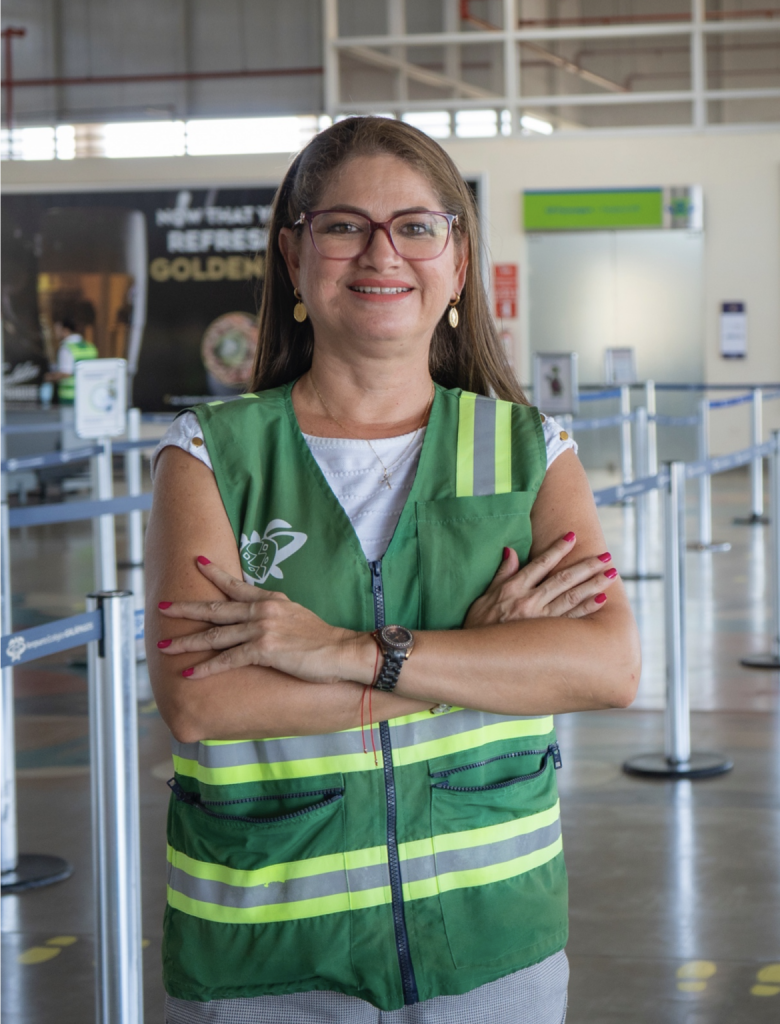
“We all know that effective leadership is about bringing the best out in other people. Often leaders are those who have had success through their own technical skills or the efforts of their team. Organizational leadership is at another level — going from hands-on guidance to purely motivating others to perform. The question is: how can we prepare people to step out of the ‘doing’ and move into ‘inspiring’?”
Sara Santana, Human Resources Manager, Galapagos Ecological Airport
Santana’s framing is pragmatic: inclusion must create measurable value. Where psychological safety is high and access to opportunity is equitable, engagement strengthens, culture coheres, and the organization becomes more adaptive. This is not merely as a social argument, but a performance one.
Developing inclusive leadership is one of the core competencies explored in ACI World’s Global Training offerings. The Talent and Growth Seminar: Customer Experience | Airport Experience provides a high-impact forum where senior HR and people leaders can exchange approaches to embedding inclusion into everyday airport operations.

Priority 2 · Leadership development
What it actually takes to develop effective airport leaders?
Whether canned or customized, leadership courses usually expose participants to financial, Human Resources and other basic principles that are table stakes for high-level leadership. They also encourage leaders to be aware of their own leadership strengths and shortcomings; teach them to effectively work with others who may have different types of personalities and work styles; and train them to focus on long-term strategic decisions.
According to Mike Christie, former Chief People Officer at Halifax International Airport Authority, the missing ingredient is experience: specifically, the experience of influencing and inspiring large groups of people outside the normal chain of command. No leadership course can replicate that.

“No one is truly ready to take on the most senior roles in an organization until they have been put in the position to influence and inspire large groups of people. Experience is the only way to test and refine true leadership skills outside of the normal chain of command. How can a leader’s words and actions inspire the achievement of a strategic goal for the entire organization?”
Mike Christie, LL.B, ICD.D, Former Chief People Officer, Halifax International Airport Authority
No one is truly ready to take on the most senior roles in an organization until they have been put in the position to influence and inspire large groups of people. Experience is the only way to test and refine true leadership skills outside of the normal chain of command. How can a leader’s words and actions inspire the achievement of a strategic goal for the entire organization?
Effective airport leaders, with their eyes on succession, are always looking to give their people such opportunities. Luckily-for this purpose at least-the airport environment is always changing. There is always a new committee that needs to be struck or an initiative that needs to be led that doesn’t fall neatly under an existing portfolio. This can be something that arises in strategic planning or is a response to an unanticipated regulation or an emerging geopolitical consideration.
Leaders learn by leading. Airports should seize the opportunities.
Priority 3 · Building a learning culture
Learning as part of the operation, not apart from it
We learn every day.
Building a real learning culture in an operational environment starts with changing one belief: that learning is separate from the day job. In airports, where daily priorities are constant, learning cannot depend only on formal courses or quiet periods. It must begin with the operation itself.
Short-term learning through daily operations
Every delay, queue issue, baggage challenge, safety event, or customer feedback point creates an opportunity to learn. Daily briefings, post-shift debriefs, KPI reviews, and cross-functional discussions allow teams to ask: What happened? Why did it happen? What should we improve next time? At Grantley Adams International Airport, using live operational performance in this way helps teams solve problems faster, improve service standards, and build confidence in continuous improvement.
From daily habits to long-term culture
These daily habits are important because they create the foundation for long-term learning. When employees experience that learning leads to better results, reduced stress, and stronger teamwork, they begin to value development rather than see it as an extra burden. This is how culture changes. People become more open to coaching, more willing to share ideas, and more interested in improving their skills.
From there, organizations can build long-term development pathways such as technical training, leadership programs, mentoring, cross-functional exposure, and succession planning. Employees are far more likely to seek these opportunities when a learning mindset already exists in the daily operation.

“In my experience, when short-term operational learning is consistent, it naturally evolves into a long-term culture where people actively pursue growth, capability, and career progression.”
Piétrick Voyer, Director of Operations, Grantley Adams International Airport
Leadership is the bridge between both levels. Managers must create psychological safety, recognize progress, and show visible commitment to development. In my experience, when short-term operational learning is consistent, it naturally evolves into a long-term culture where people actively pursue growth, capability, and career progression.
Priority 4 · Workforce planning and training needs
How airports identify training needs across the ecosystem
An airport is not a single workplace. It is a system of systems – ground handlers, security teams, terminal operations, commercial functions, regulatory bodies, and airlines – each with its own skills and pressures.
Asking “what training do our people need?” is therefore far harder than it sounds. No single perspective sees the whole picture. Yassine Zerrouk, Director of Strategic Delivery at ACI World, argues that the answer begins with a shared language. Mature airports anchor workforce planning in a competency framework, typically organised around a handful of knowledge areas and several hundred specific competencies. This shared vocabulary is what makes a meaningful training needs assessment possible. Without it, every department describes capability differently, and coordination across the ecosystem becomes impossible.
From there, a well-designed assessment layers four lenses on the same workforce:
|
Relevance
what employees find useful for their own role and development
|
Priority
which competencies matter most for team performance today
|
Competency
where the team actually stands on each knowledge, skill, and ability
|
Organisational objective
where the airport is heading, including strategy, regulation, and ambition
|
The four-lens model for training needs assessment
A well-designed training needs assessment layers four distinct perspectives on the same workforce:
- Relevance: what employees find useful in their own role and development
- Priority: which competencies matter most for team performance today
- Competency: where the team actually stands on each knowledge, skill and ability
- Organisational objective: where the airport is heading, including strategy, regulation and ambition
Each lens on its own is incomplete. Priority without competency is a wish list, and competency without priority is a spreadsheet. The insight lives in the convergence.

“The value lies in the convergence. Where all four lenses point to the same competencies, the signal is unambiguous, and the airport can invest with confidence. Where they disagree, the tension is just as useful: skills employees want but that aren’t strategic, real gaps the workforce hasn’t yet named, or ambitions that need investment to become actual capability. That is where training stops being a checklist and becomes a conversation about the airport’s future.”
Yassine Zerrouk, Director, Strategic Delivery, ACI World
Continuing the conversation
The themes explored here — inclusive cultures, real-world leadership development, operationally embedded learning, and competency-driven workforce planning — are among the defining challenges for airport HR professionals in 2026. They share a common direction: moving from programmes that sit alongside the operation to capabilities that are woven into it.
Frequently Asked Questions
What are the top HR priorities for airports in 2026?
The top four HR priorities shaping airports in 2026 are: inclusion and people strategy, leadership development, building a learning culture, and competency-driven workforce planning.
How are airports developing leaders in 2026?
Leading airports are creating real leadership experience by assigning high-potential employees to cross-functional committees and strategic initiatives outside their normal reporting lines — because experience, not courses alone, builds effective leaders.
How do airports build a learning culture?
A learning culture in airports starts with embedding learning into daily operations — using shift debriefs, KPI reviews, and post-incident discussions — before layering in formal development pathways like mentoring and succession planning.
What is a competency framework in airport HR?
A competency framework is a shared vocabulary of skills, knowledge areas, and behaviours that allows airports to align workforce planning, training needs assessments, and talent development across a complex, multi-stakeholder environment.
How is DEI evolving in the airport industry?
Airports are shifting inclusion from standalone programs to operational practice — embedding equitable behaviours into leadership decisions and the employee experience — framing it as a performance driver rather than a compliance exercise.
related articles





comments